






Stock Market Today: Why the Dow, S&P 500, and Nasdaq are Under Pressure as Oil Prices Spike
 March 19, 2026
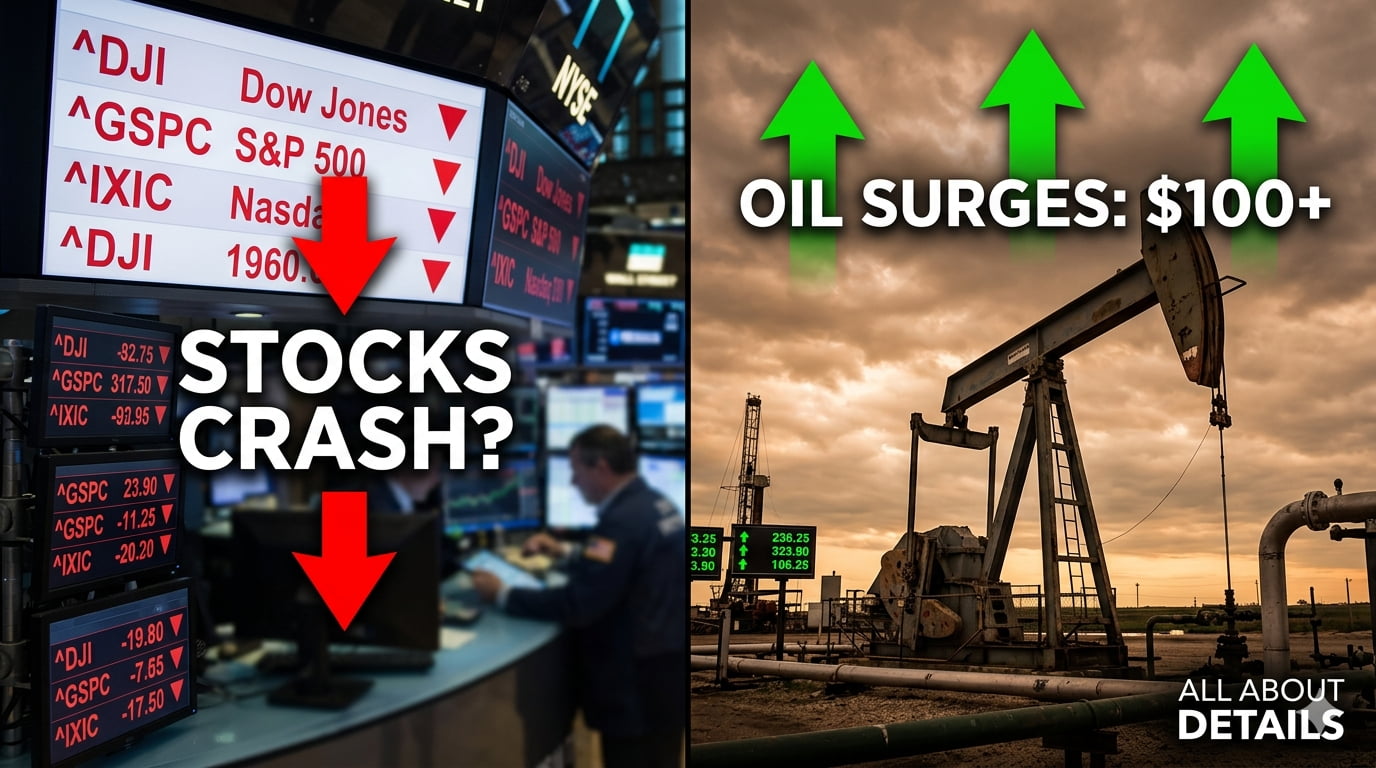
The atmosphere on Wall Street has shifted from cautious optimism to outright concern. If you are tracking the stock market today, you’ve likely noticed a sea of red across your trading screens. Major U.S. stock futures, including the Dow Jones Industrial Average, the S&P 500, and the tech-heavy Nasdaq, have all taken a significant hit this morning.
But what exactly is causing this sudden dip? It’s not just one factor; rather, it’s a “perfect storm” of geopolitical instability involving Iran and a stubborn inflation problem that refuses to go away. For investors, the primary concern is no longer just “when” interest rates will fall, but whether the economy can withstand these new shocks without sliding into a recession.
The Geopolitical Spark: Iran and the Oil Market
Geopolitics has a way of disrupting even the most solid economic recoveries. Recently, the escalating tensions in the Middle East specifically involving Iran have sent shockwaves through the global energy sector. Iran is a pivotal player in the global oil supply chain, and any threat to its exports or the security of the Strait of Hormuz leads to immediate price hikes.
Shutterstock
Explore
Crude oil prices have surged past the $90 per barrel mark, with some analysts predicting a run toward $100 if the situation doesn’t stabilize. On the stock market today, this spike in energy costs is being viewed as a massive hurdle for corporate earnings. When oil goes up, everything from manufacturing to shipping becomes more expensive, which eventually eats into the profit margins of the companies we all invest in.
Inflation: The “Sticky” Problem That Won’t Quit
Beyond the headlines of war and conflict, there is a more fundamental economic issue at play: inflation. For months, investors have been hoping that the Federal Reserve would finally start cutting interest rates. However, recent data suggests that inflation is far more “sticky” than previously thought.
The latest Consumer Price Index (CPI) and Producer Price Index (PPI) reports have come in higher than expected. This means that despite the Fed’s best efforts, the cost of living and the cost of doing business remains elevated. When inflation stays high, the Fed has no choice but to keep interest rates “higher for longer.” This is exactly why the Nasdaq, which is home to many interest-rate-sensitive tech companies, is seeing some of the sharpest declines on the stock market today.
Current Market Snapshot: Live Performance Data
Understanding where the market stands requires a look at the actual numbers. Here is a breakdown of how different sectors are performing amid this volatility:
| Index / Asset | Movement Today | Current Sentiment | Primary Driver |
| Dow Jones (Futures) | 📉 Down 1.4% | Bearish | Industrial & Energy Costs |
| S&P 500 (Futures) | 📉 Down 1.2% | Cautious | Broad Market Sell-off |
| Nasdaq-100 (Futures) | 📉 Down 1.8% | Weak | Interest Rate Sensitivity |
| Brent Crude Oil | 📈 Up 3.9% | Aggressive | Iran Geopolitical Risk |
| 10-Year Treasury Yield | 📈 Rising (4.28%) | Concerned | Inflation Expectations |
Why Tech Stocks are Taking the Hardest Hit
You might wonder why the Nasdaq often falls more than the Dow during these times. The reason is valuation. Many tech companies are valued based on their future earnings. When interest rates are high, the value of those future dollars decreases in today’s terms.
Furthermore, high energy prices increase the cost of running massive data centers—the backbone of the modern AI and cloud industry. For the stock market today, this means that even giants like Nvidia or Microsoft aren’t immune to the broader economic pressure.
The Impact on the Average Investor
It’s easy to get lost in the jargon of “futures” and “yields,” but what does this mean for someone managing a retirement account or a personal portfolio?
- Increased Volatility: Expect the market to be “choppy.” Prices might swing wildly based on a single news headline from the Middle East.
- Higher Gas Prices: As crude oil rises, you will likely see the impact at the pump within days. This leaves less money in consumers’ pockets for discretionary spending.
- Bond Market Shifts: With inflation staying high, bond yields are rising. This makes borrowing money—for a house or a car more expensive.
For those looking for a deeper dive into how energy prices affect the broader economy, the U.S. Energy Information Administration (EIA) provides excellent real-time data that is essential for any serious finance enthusiast.
Is There a Silver Lining?
While the headlines look grim, seasoned investors know that market pullbacks are a natural part of the cycle. Some sectors, particularly Energy and Defense, often perform well during these periods. Companies involved in oil exploration or military technology tend to see increased demand when global tensions rise.
Furthermore, a “clearing out” of the market can sometimes be healthy. It removes the “excess” and allows for more sustainable growth once the geopolitical dust settles. The key is not to panic but to stay informed.
Technical Analysis: Key Levels to Watch
On the stock market today, technical analysts are keeping a close eye on the 200-day moving averages for both the S&P 500 and the Nasdaq. If the indices fall below these levels, it could trigger more automated selling. However, if they hold these support levels, it might signal that the worst of the selling is over.
Final Thoughts: Staying the Course
In conclusion, the stock market today is facing a double-whammy of high oil prices and stubborn inflation. The situation in Iran has added a layer of uncertainty that Wall Street hates. However, the U.S. economy has proven to be incredibly resilient in the past.
For the readers of allaboutdetails.xyz, the best advice is to remain diversified. Don’t put all your eggs in one basket, and keep a close eye on the Federal Reserve’s upcoming meetings. The road ahead may be bumpy, but for the patient investor, these moments often provide the best long-term opportunities.