






How an Attack Could Rattle the Global Oil Market and Your Wallet
 March 1, 2026
Let’s be honest, most of us feel a little sting when we fill up our cars. The price of gas is a real-world number that affects our daily budget. Now, imagine that price not just creeping up, but launching into the stratosphere overnight. That’s the kind of scenario experts worry about when they discuss the possibility of a military conflict involving Iran.
This isn’t just a distant headline; it’s a situation with the potential to shake the global economy to its core. But how does an event thousands of miles away translate to a direct hit on your finances? Let’s walk through it step-by-step, without the complicated jargon.
The World’s Most Critical Chokepoint
First, you need to know about a place called the Strait of Hormuz. Think of it as the world’s most important energy highway. It’s a narrow channel of water, and a staggering amount of the world’s oil supply—about a fifth of all the oil consumed globally sails through it every single day on massive tankers.
Iran’s geographic position gives it significant control over this chokepoint. In the event of an attack, one of Iran’s most powerful retaliatory moves would be to disrupt or completely shut down this vital passageway. If that “highway” closes, the flow of oil from major producers like Saudi Arabia, the UAE, Kuwait, and Iraq gets cut off from the rest of the world. The supply doesn’t just dip; it falls off a cliff.
The Immediate Shockwave: Panic on the Market
The global oil market is notoriously skittish. It hates uncertainty. The moment a conflict begins, even before a single drop of oil supply is lost, fear and speculation would take over.
- Supply Disappears: An attack would likely damage Iran’s own oil facilities, taking its exports off the market.
- The Strait is Threatened: The bigger fear is the closure of the Strait of Hormuz, which would create a massive, immediate global shortfall.
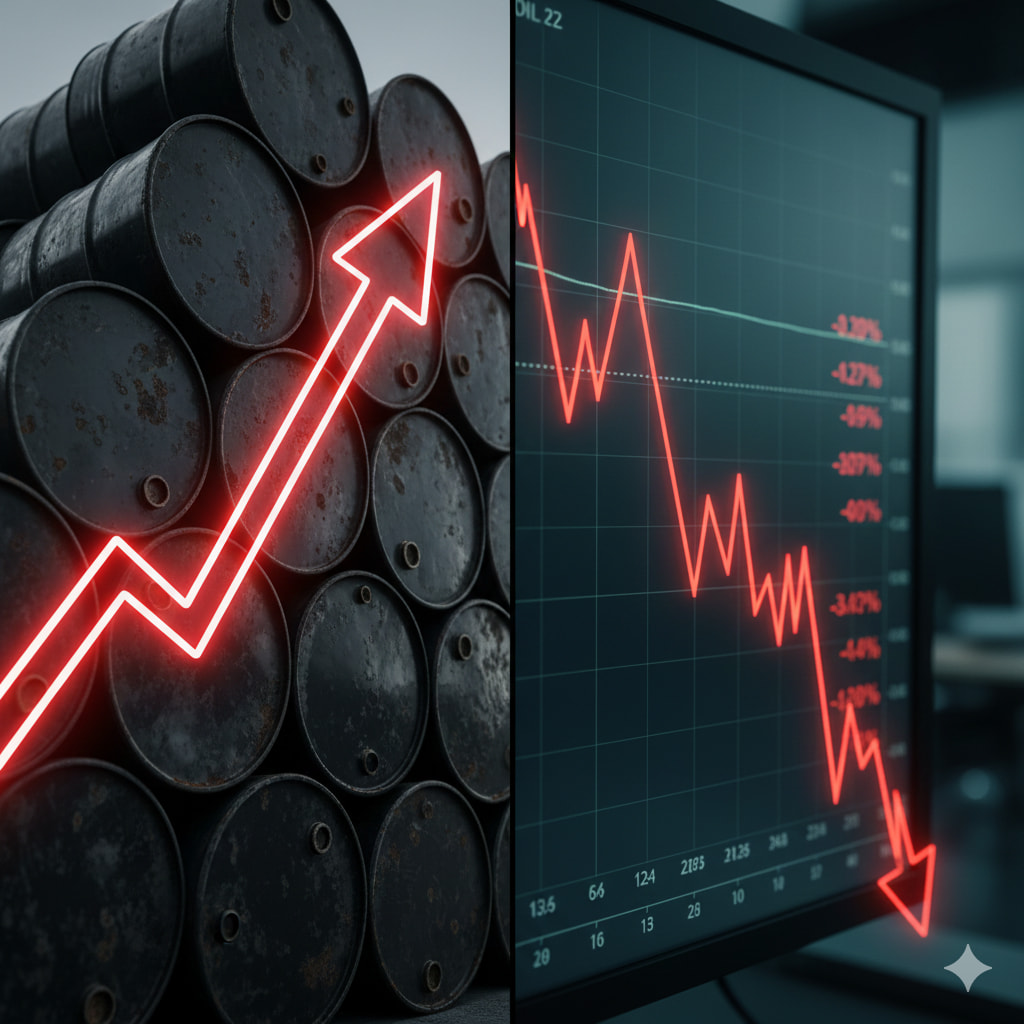
The reaction would be instant. Traders would bid up the price of any available oil barrel to astronomical levels. We’re not talking about a 10% or 20% increase. Analysts from respected institutions have modeled this scenario for years. For instance, reports have highlighted that a significant conflict could easily push prices well into the triple digits, creating an unprecedented energy crisis. As a reference, you can explore more on how geopolitical risks are priced into oil markets through analysis from institutions like the Council on Foreign Relations.
Data for Chart: Potential Oil Price Scenarios
You can use the data below to create a simple bar chart to visually represent the potential impact for your readers.
| Scenario | Price Per Barrel (USD) | Impact Level |
|---|---|---|
| Current Market | ~$85 | Baseline |
| Minor Conflict (No Disruption) | ~$110+ | High Tension & Fear |
| Iran’s Exports Halted | ~$150+ | Significant Supply Loss |
| Strait of Hormuz Disrupted | ~$200 – $250+ | Catastrophic Supply Shock |
The Ripple Effect: From the Pump to Your Portfolio
This is where it starts to hit home for everyone. A massive spike in oil prices is like a tax on everything.
- At the Pump: This is the most direct impact. If crude oil doubles or triples in price, you can expect the price of gasoline to follow suit, making daily commutes and family trips painfully expensive.
- Rising Inflation: It costs more to transport every product you buy, from groceries to Amazon packages. It costs more for factories to make things. Businesses will have no choice but to pass these costs onto you, the consumer. This means higher prices for almost everything, a phenomenon known as inflation.
- Economic Slowdown: When people are forced to spend a huge portion of their income on essentials like gas and food, they stop spending on other things—like going out to eat, buying new clothes, or going on vacation. This drop in consumer spending is a major blow to the economy and can lead to businesses laying off workers, raising the risk of a full-blown recession.
- Stock Market Nosedive: The stock market thrives on stability and predictable growth. A war and an oil crisis are the exact opposite of that. Airline stocks would get hammered. Logistics and transportation companies would suffer. The broader uncertainty would likely cause a major sell-off as investors flee to safer assets.
The Long Road Ahead
The consequences of such a conflict wouldn’t just be a temporary blip. Countries around the world, especially the United States, would be forced to tap into their strategic petroleum reserves to cushion the blow, but this is a limited, short-term fix.
Longer-term, a crisis of this magnitude would force a painful but necessary global conversation about our deep dependence on oil from volatile regions. It would undoubtedly accelerate the push toward electric vehicles and renewable energy, but that transition takes years and doesn’t solve the immediate economic crisis.
In the end, peace and stability in the Middle East are not abstract foreign policy goals; they are a cornerstone of global economic health. A conflict with Iran would set off a devastating chain reaction, and it’s a reminder that in our interconnected world, we are all tied to the same economic fate.